パークホテル東京 アーティストルーム「桜」現代日本画家・大竹寛子氏 インタビュー ~時・夢・季節が交差する“桜の間”に込めた想いとは~
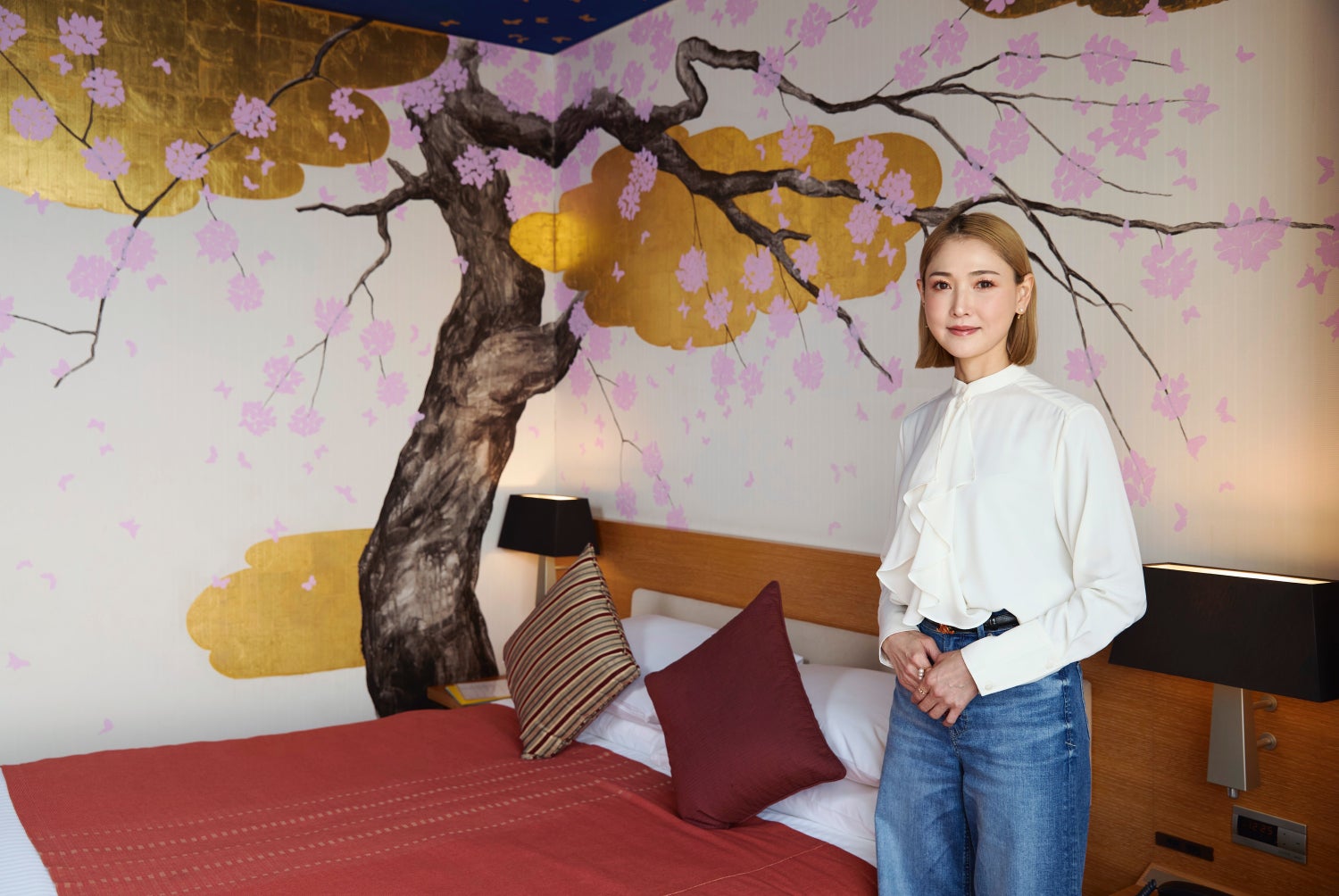
パークホテル東京(運営:株式会社芝パークホテル/東京都港区、代表取締役社長 柳瀬連太郎)のアーティストルーム「桜」は、現代日本画家・大竹寛子氏が1か月の滞在制作を経て完成させた、空間全体がアートとなる唯一無二の客室です。今回は、大竹氏に制作当時のエピソードやテーマ、部屋に込めた想いを伺いました。
■ 現代日本画家・大竹寛子氏 インタビュー
Q1. 普段はキャンバスのような平面作品を中心に制作されていますが、ホテルの客室全体をひとつの作品として描くのは大きな挑戦だったのではないでしょうか。空間を意識しながら「部屋そのものを描く」ことについて、工夫された点やご苦労があったら教えてください。
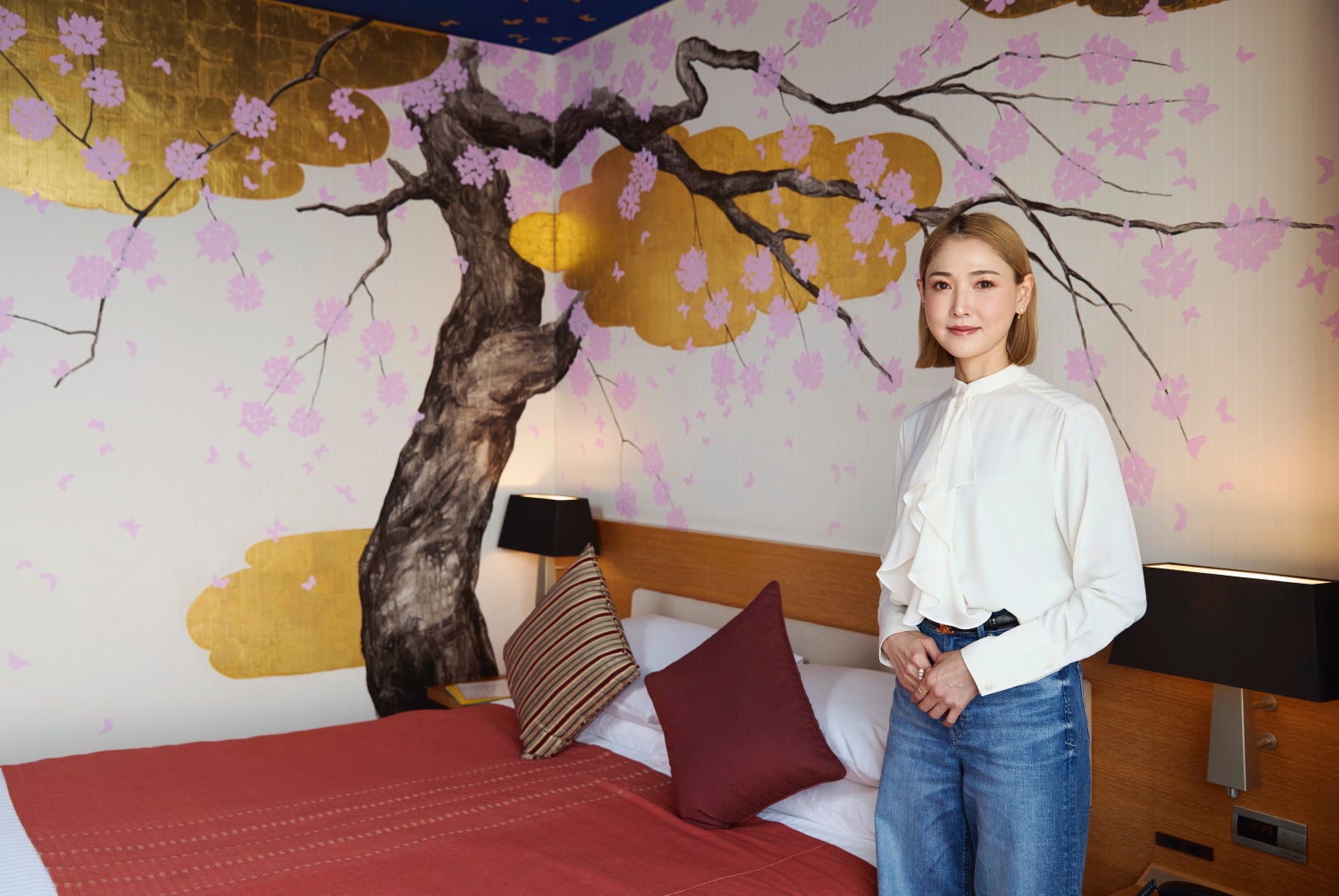
日本画には、桃山時代から江戸初期にかけて発展した「障壁画」という文化があります。襖や屏風といった建具に描かれ、空間全体で表現するもので、二条城などが代表例です。これまで障壁画のような大規模な空間に描く機会はありませんでしたので、10年前にアーティストルームの制作を担当した際は、壁の角や天井まで思いきり使って描くことができ、伝統的な障壁画を現代的な感性で再解釈する、とても貴重な経験になりました。
一方で、技法面では課題も多くありました。私は普段、日本画の岩絵具を使って制作しているのですが、岩絵具は粒子が重いため、水平に置いた画面に絵具を寄せるようにして描き、完全に乾かしてから立てるという工程を踏みます。しかし、壁面では絵具が垂れてしまうため、今回はアクリルガッシュを使用しました。さらに金箔は、通常の「ドーサ液」が壁には適さないため、特殊なのりを使うなど、新しい試みの連続でした。
また、桜を描くにあたっては、長谷川等伯の息子・久蔵による「桜図」から大きな影響を受けています。そのまま桜を現代風に描くだけでは面白くないと感じ、花びらをすべて“蝶”に見立てました。ぱっと見は桜の花びらに見えますが、よく見ると蝶の形になっている――。部屋に泊まった方が、滞在の中でその仕掛けに気づき、楽しんでいただけるようにという想いを込めています。
Q2. なるほど。大竹さんの作品には蝶が多く登場しますよね。「儚さの中の美しさや真実」の象徴として蝶をモチーフにしていると伺いましたが、そもそもなぜ蝶を選ばれたのでしょうか?
蝶にはさまざまな意味を込めていますが、特に大きな着想源となっているのが、荘子の「胡蝶の夢」です。荘子が夢の中で蝶になり、目覚めたあとも“夢の中の自分”と“現実の自分”のどちらが本当の自分なのかわからなくなる――そんな幻想的な物語です。夢でも現実でも「自分は自分」。世界はひとつではなく、ふたつの基準が同時に存在するようなもの――こうした考え方が、私自身の制作コンセプトに強く結びついています。
このアーティストルームでも、「夢と現実」、「異なる時間軸が並存する世界」といった“二重性”をテーマにしています。美術館では天井を見上げることはあまりないと思いますが、ホテルではベッドに横になると自然と天井を見ますよね。そのとき、天井に描いた蝶がまるで夢の中で羽ばたいているように感じられませんか?部屋の下部には“現実の世界”を、天井には“夢の世界”を描き、二つの世界が同時に存在するイメージを表現しました。宿泊された方が天井を見上げた瞬間、蝶が夢の世界へ誘うような没入感を味わっていただけたら嬉しいです。
Q3. 夢と現実を行き来する象徴として「蝶」を選ばれたとのことですが、作品には桜の散りゆく“儚さ”と、部屋全体に描かれた春夏秋冬の“季節の巡り”という、二つの異なる時間軸も表現されています。こうした時間の扱いについては、意識して描かれたのでしょうか?
はい。まさにそのように感じ取っていただけて嬉しいです。「桜の刹那的な美しさ」と「永遠に続く季節の循環」。相反する二つの時間が同じ空間で共存していることこそ、この部屋の世界観であり、コンセプトの中心にあるテーマです。
儚いものの美しさと、変わらずに続くものの強さ――。その対比をひとつの部屋の中でどう表現できるかを大切にして制作しました。
Q4. 本物の金箔も使用されたとのことですが、その理由を教えていただけますか?
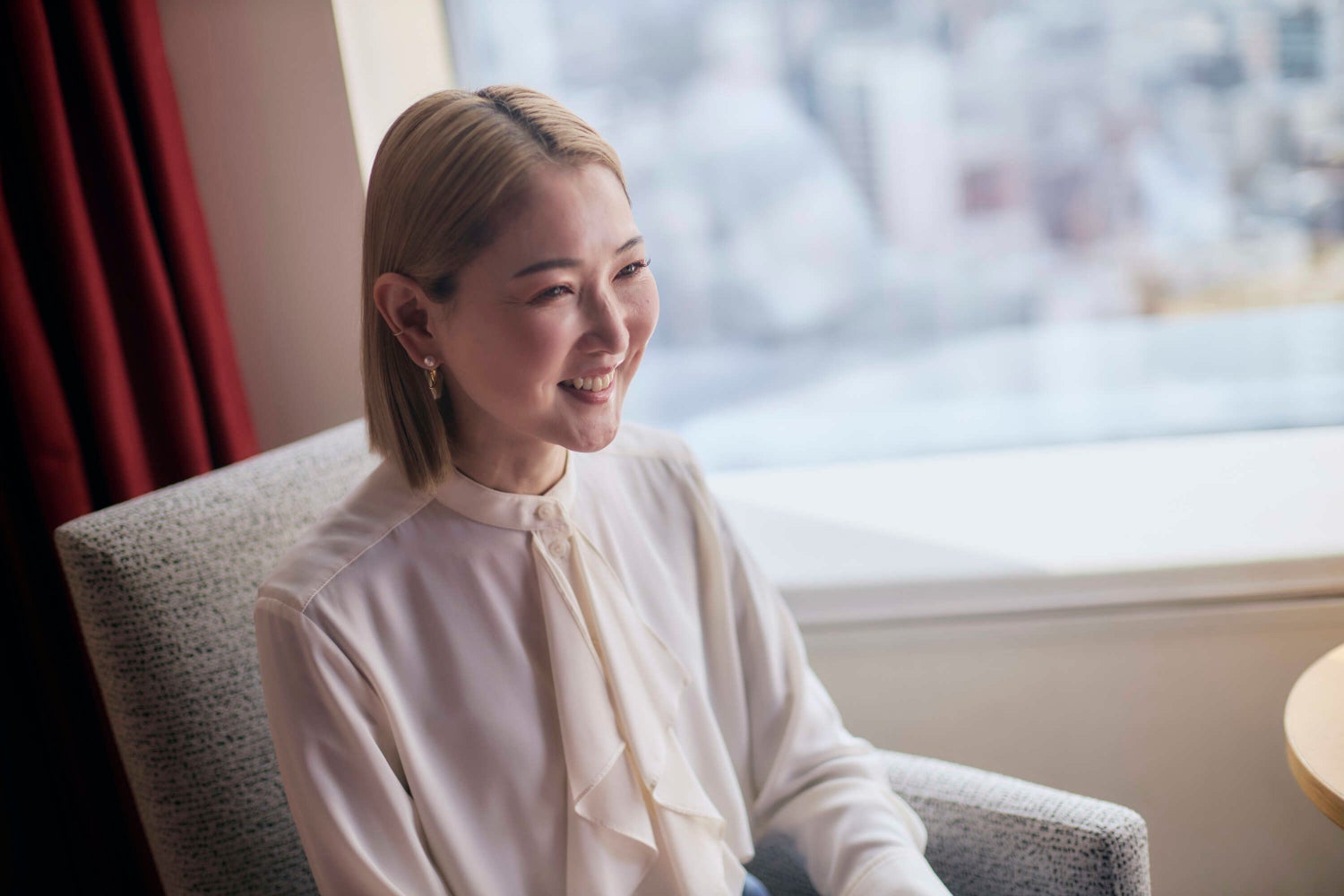
金箔には、空間に光を取り込み、部屋全体を明るくしてくれる効果があります。夜になると外の夜景が金箔に反射して、より幻想的な雰囲気が生まれるのも魅力のひとつです。
桃山時代にも、暗い室内に光を取り込むために金箔が用いられてきましたが、そうした伝統を現代の空間で継承するという意味合いも含めています。さらに、金は物質としてほとんど変化しない“永遠性”の象徴でもあります。桜の持つ儚さとの対比をつくるという意図もあり、この部屋のテーマとも深く結びつく素材として金箔を選びました。
Q5. 作品には「もののあはれ」や「諸行無常」といった、日本特有の美意識が色濃く感じられます。制作にあたり、特に影響を受けた日本文化や人物、思想があれば教えてください。
先ほども少し触れましたが、長谷川等伯の屏風作品には大きな影響を受けています。加えて、円山応挙の「氷図」という屏風もとても印象的な作品です。氷を線だけで描き出していて、写実的でありながら抽象的でもある。わずかな線だけで、あの“冷たい空気感”が伝わってくるんです。
その表現は、戦後アメリカで流行したミニマリズムにも通じるものがありますが、そうした“現代的”とされる様式を江戸時代の段階で表現していたという点に、強く心を揺さぶられました。私が日本画を始める大きなきっかけにもなった作品です。「氷図」は、最小限の筆致で世界を立ち上げているところが本当にかっこいいと思います。
Q6. パークホテル東京に1か月滞在しながら制作されたと伺いました。“ホテルに泊まりながら描く”というプロセスならではの発見やエピソードはありましたか?
毎日制作だけに集中できる環境は、本当にありがたかったですね。滞在した部屋からは東京タワーや富士山が見え、夕暮れの空が刻一刻と変化していく様子がとても美しくて。時間の移ろいはこの作品の大きなテーマでもあったので、その変化を目の前で感じながら描けたのは貴重な体験でした。制作が完了したときには、近くで制作していた方々と小さなパーティーを開いたりと、思い出深い時間を過ごしました。
Q7. パークホテル東京の宿泊者の95%以上が海外からのお客様ですが、海外のゲストにはどのようなホテル体験をしてほしいとお考えですか?
まずは、桜が持つ華やかさや、日本ならではの情緒を素直に味わっていただきたいですね。そして、部屋で過ごすうちに“桜だと思っていた花びらが、実は蝶だった”と気づく。その小さな発見も、現代アートならではの楽しみ方のひとつです。そんな体験を通して、日本文化の奥行きと遊び心を感じていただけたら嬉しいです。
Q8. アーティストルーム「桜」を制作されてから、もう10年近くが経ちました。当時と今では、作品の見え方や感じ方に変化はありますか?
当時はすべて一人で制作していたので、体力的には本当に大変で……今振り返ると「よく描き切ったな」と懐かしく思います。天井を描くために、毎日ゴーグルと作業服で挑んでいたことを思い出すと、その頃の熱量や勢いが蘇ってきますね。やっぱり時間が経つと、まず思い出すのはそうした苦労や奮闘の記憶なんだなと感じます。
Q9. 最後に、アーティストルーム「桜」にご宿泊される皆さまへメッセージをお願いします。
この部屋は、桜を起点に時間や季節の移ろいを描いた空間です。蝶は“変容”と“再生”の象徴でもあり、そこに込めた想いが部屋全体に広がっています。
ここで過ごすひとときが、皆さま自身の内側にある記憶や感覚と響き合い、心静かに、豊かな時間を味わっていただけたら嬉しく思います。
■スタッフからのコメント:
10年前に完成した「桜」の部屋は今でも大変人気の高いアーティストルームのひとつです。一見して華やかで、桜のある日本らしい風景は海外からのお客様の目を楽しませ続けています。今回お話を伺ったなかで、「夢と現実」「桜の儚さと永続性のある季節の巡り」「昼と夜」など、相反する要素が随所にちりばめられ、大竹さんの主たるモチーフである蝶がその間を自由に羽ばたき、私たちを彼女の世界観に誘ってくれている、そんな印象を受けました。そして桜の花びらが実は蝶だった!という新たな気づきもあり、現代アートの遊び心が潜んでいることも大きな魅力です。
長谷川等伯の屏風絵や円山応挙の「氷図」から大きな影響を受けたことがきっかけで日本画を始めたという大竹さん。伝統的な日本画の技法と現代的な感性がミックスされたアーティストルーム「桜」は、まさに“日本の美意識が体感できる時空間”です。ぜひ素敵なひとときをお過ごしください。
■作家プロフィール
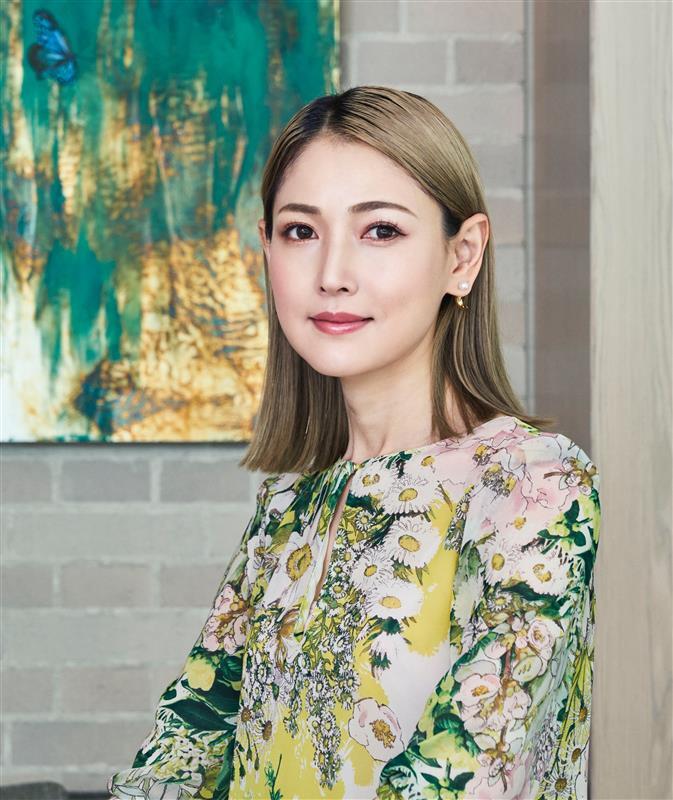
2006 東京藝術大学絵画科日本画専攻 卒業
卒業制作 帝京大学買い上げ
2008 東京藝術大学大学院美術研究科日本画専攻 修了
2009 第19期佐藤国際文化育英財団奨学生(佐藤美術館)
東京藝術大学大学院美術研究科博士後期課程
日本画研究領域修了 美術研究博士号取得
2011-2014 同大学教育研究助手 日本画
2015-2016 文化庁新進芸術家海外派遣制度(アメリカ・ニューヨーク)
2019 ローマ教皇来日に伴いバチカン市国に作品「Psyche」を寄贈
現在 長年研鑽を積んだ日本画の伝統的な技法を基に、箔や岩絵具を用いて新たな表現を展開し、国内外で広くアート活動を行っている。
パークホテル東京について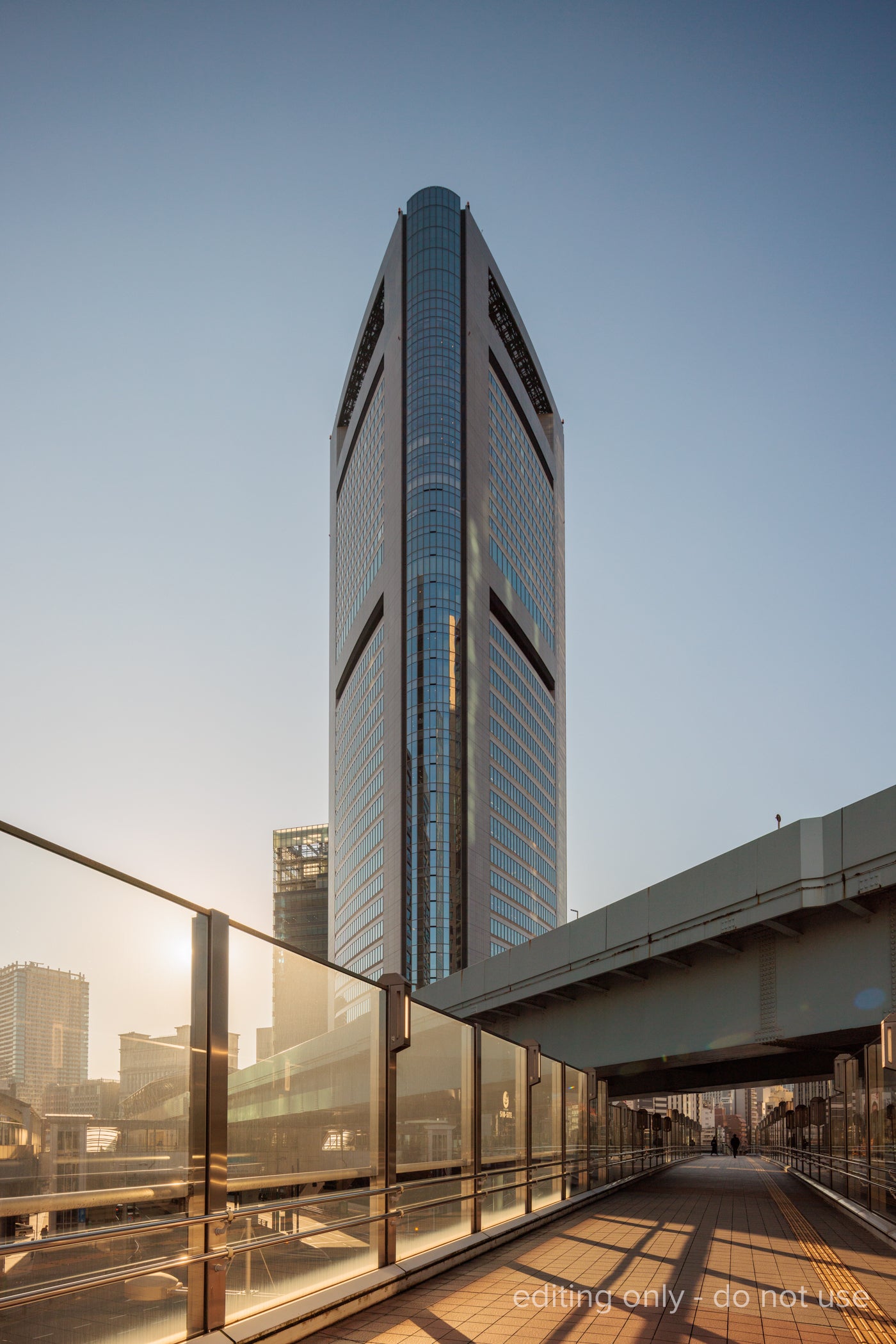
パークホテル東京は、1948年創業の芝パークホテルの姉妹ホテルです。汐留メディアタワー25階から34階にあり、東京タワーや富士山を見渡せる絶景が魅力です。客室は268室で、うち51室はアーティストが壁に絵を描いた「アーティストルーム」です。この「アーティストルーム」は、“日本の美意識が体感できる時空間”をコンセプトにしたプロジェクトで、ジャパン・ツーリズム・アワードで領域優秀賞を受賞しました。ロビーや回廊には400点以上のアートが展示されています。呈茶や絵画体験などのアートイベントも開催しています。
https://parkhoteltokyo.com
*********************************************************************************
Park Hotel Tokyo Artist Room “Cherry Blossom”
Interview with Contemporary Nihonga Painter, Hiroko Otake
- The vision behind “the Cherry Blossom Room,” where time, dreams, and seasons intersect -
Park Hotel Tokyo (Operated by Shiba Park Hotel Co., Ltd., Minato-ku, Tokyo; President: Rentaro Yanase) presents Artist Room “Cherry Blossom,” a one-of-a-kind guestroom in which the entire space itself becomes art, completed by contemporary Nihonga, traditional Japanese painting, painter Hiroko Otake after a month-long stay and creation. In this interview, Otake reflects on the stories behind the work, the themes she explored, and the thoughts she wove into the room.
■Interview with Contemporary Nihonga Painter Hiroko Otake
Q1. You usually create on flat surfaces such as canvas, so taking on an entire guestroom as a single work must have been a major challenge. What considerations or difficulties did you encounter in “painting the room itself” while being conscious of the space?
In Nihonga there is a tradition called shōheki-ga—large-scale paintings on architectural surfaces such as fusuma (paper sliding doors) and byōbu (folding screens)—which developed from the Momoyama period (1573–1603) into the early Edo period (from 1603). Exemplars include Nijō Castle (Kyoto). Until I was commissioned to create an Artist Room ten years ago, I had never had the opportunity to paint on such a large, spatial format. Being able to use the corners of the walls and even the ceiling with abandon became a precious experience—one in which I reinterpreted traditional shōheki-ga through a contemporary sensibility.
On the technical side, there were many challenges. I usually work with iwa-enogu (mineral pigments) used in Nihonga, and because the particles are heavy, I paint on a horizontal surface, guiding the pigments into place and letting them dry completely before setting the work upright. On vertical walls, however, the paint would run, so for this project I used acrylic gouache. For gold leaf, the conventional dōsa sizing is not suitable for walls, so I used a special adhesive—one new experiment after another.
As for the cherry blossoms, I was strongly inspired by Sakurazu by Kyūzō, the son of Hasegawa Tōhaku. Simply rendering cherry blossom in a contemporary manner didn’t feel compelling to me, so I conceived every petal as a butterfly. At first glance they appear to be cherry petals, but on closer look they are butterflies. I embedded this playful device so that guests might discover it during their stay and enjoy that moment of realization.
Q2. Indeed, butterflies appear frequently in your work. You’ve said they symbolize “beauty and truth within ephemerality.” What led you to choose the butterfly as a motif in the first place?
The butterfly holds multiple meanings for me, but a major source of inspiration is Zhuangzi’s “Butterfly Dream.” In the tale, Zhuangzi becomes a butterfly in a dream, and upon waking cannot tell whether he is Zhuangzi who dreamed of being a butterfly, or a butterfly dreaming of being Zhuangzi. Whether in dream or reality, “I am who I am.” The world is not singular—two frameworks can exist simultaneously. This way of thinking is deeply connected to my artistic concept.
In this Artist Room, I explored the theme of “duality,” such as “dream and reality” and “parallel timelines.” In museums, one rarely looks up at the ceiling, but in a hotel you naturally look upward when lying in bed. In that moment, don’t the butterflies painted on the ceiling feel as if they are fluttering in a dream? I painted the lower walls as the “real world” and the ceiling as the “dream world,” expressing the coexistence of these two realms. I would be delighted if guests, upon looking up, could experience an immersive sensation—as though the butterflies were inviting them into the world of dreams.
Q3. While the butterfly symbolizes moving between dream and reality, the work also expresses two different temporalities: the “ephemerality” of falling blossoms and the “cycle of the seasons” depicted throughout the room. Did you consciously address time in this way?
Yes, and I’m glad you perceived it that way. “The fleeting beauty of Cherry Blossom” and “the perpetual cycle of the seasons”—the coexistence of these opposing times within a single space lies at the heart of this room’s worldview and concept.
The beauty of what is transient and the resilience of what endures—I focused on how to express that contrast within one room.
Q4. You also used genuine gold leaf. What was your intention?
Gold leaf brings light into a space and brightens the entire room. At night, the cityscape outside reflects on the gold leaf, creating an even more dreamlike atmosphere—that’s part of its allure. In the Momoyama period (1573–1603), gold leaf was also used to introduce light into dim interiors, and I wished to carry that tradition forward in a contemporary setting. Moreover, as a material, gold hardly changes—making it a symbol of “eternity.” I chose gold leaf to create a contrast with the transience of cherry blossom, a choice that resonates deeply with the room’s theme.
Q5. Your work reflects a Japanese sense of beauty shaped by impermanence; in creating this room, which aspects of Japanese culture—or which figures or ideas—most influenced you?
As I mentioned, I’ve been greatly influenced by Hasegawa Tōhaku’s folding screens. In addition, Maruyama Ōkyo’s byōbu work “Hyozu” (Ice) left a profound impression on me. He depicts ice solely with lines, achieving something both realistic and abstract. With minimal strokes, one can feel that “cold air.”
This expression also resonates with the Minimalism that flourished in postwar America. The fact that such “contemporary” modes were achieved in the Edo period moves me deeply. It is one of the works that prompted me to pursue Nihonga. I find it truly compelling how “Hyozu” builds a world from the fewest possible brushstrokes.
Q6. You created the work over a one-month stay at Park Hotel Tokyo. Did the process of “painting while staying in the hotel” lead to any discoveries?
I was truly grateful for an environment where I could devote myself to creating every day. From the room I could see Tokyo Tower and even Mt. Fuji, and the twilight sky changed moment by moment with such beauty. The passage of time is a major theme of this work, so painting while witnessing those shifts firsthand was invaluable. When I finished, we held a small party with people who had been creating nearby—it’s a memory I cherish.
Q7. More than 95 percent of Park Hotel Tokyo’s guests are from overseas. What kind of experience would you like international visitors to have at the hotel?
First, I’d like them to savor the splendor of cherry blossom and the uniquely Japanese sentiment it carries. And as they spend time in the room, I hope they’ll notice that the petals they took for cherry blossom are in fact butterflies. That small discovery is one of the pleasures unique to contemporary art. Through such moments, I hope they can feel both the depth and the playfulness of Japanese culture.
Q8. It has been nearly ten years since you created Artist Room “Cherry Blossom.” Has your perception of the work changed over time?
Back then I worked entirely on my own, and it was physically demanding. Looking back, I feel a fond amazement that I “carried it through.” Remembering how I donned goggles and workwear each day to paint the ceiling brings back the vigor and intensity of that time. As the years pass, it’s those struggles and hard-won moments that come to mind first.
Q9. Lastly, do you have a message for guests staying in Artist Room “Cherry Blossom”?
This room is a space that traces time and the changing seasons, with cherry Blossom as its starting point. The butterfly is also a symbol of “transformation” and “renewal,” and that intention suffuses the entire room. I would be delighted if the time you spend here resonates with the memories and senses within you, allowing you to enjoy a calm and enriching moment.
■ Staff Comment
Completed ten years ago, “Cherry Blossom” remains one of our most popular Artist Rooms. At first glance it is gorgeous—the quintessential Japanese scene of cherry blossoms continues to delight our overseas guests. In speaking with Ms. Otake, we were struck by the interplay of opposites throughout: “dream and reality,” “the transience of cherry blossom and the enduring cycle of the seasons,” “day and night.” Her signature motif—the butterfly—freely traverses those realms and invites us into her worldview. The discovery that the cherry petals are, in fact, butterflies reveals a playful spirit at the heart of contemporary art.
Inspired by Hasegawa Tōhaku’s folding screens and Maruyama Ōkyo’s “Hyozu,” Ms. Otake began her journey in Nihonga. Artist Room “Cherry Blossom,” which fuses traditional techniques with a contemporary sensibility, is truly “a spatiotemporal experience where the Japanese aesthetic can be felt firsthand.” We hope you will enjoy a wonderful stay.
■ Artist Profile
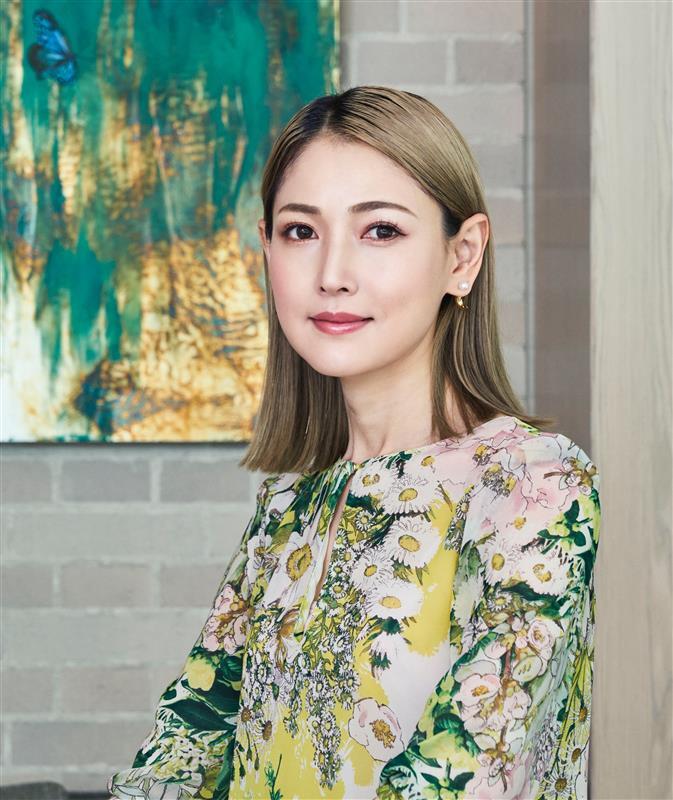
2006 B.F.A. in Japanese Painting, Tokyo University of
the Arts Graduation
Project purchased by Teikyo University
2008 M.F.A. in Japanese Painting, Graduate School of
Fine Arts, Tokyo
University of the Arts
2009 The 19th scholarship Award (Sato International
Cultural Scholarship Foundation)
2011 Ph.D. (Fine Arts) in Japanese Painting, Graduate School of Fine Arts,
Tokyo University of the Arts
2011-2014 Research Associate, Japanese Painting, Tokyo University of the Arts
2015-2016 Grantee of the Program of Overseas Study for Upcoming Artists
(New York, USA), Agency for Cultural Affairs
2019 Presented the artwork “Psyche" to Vatican City State to commemorate
the Papal visit to Japan.
Current Based on traditional Nihonga (traditional Japanese painting) techniques
refined over many years, Hiroko Otake develops innovative expressions
using gold and silver leaf and mineral pigments. Currently active in the
contemporary art scene both in Japan and internationally.
About Park Hotel Tokyo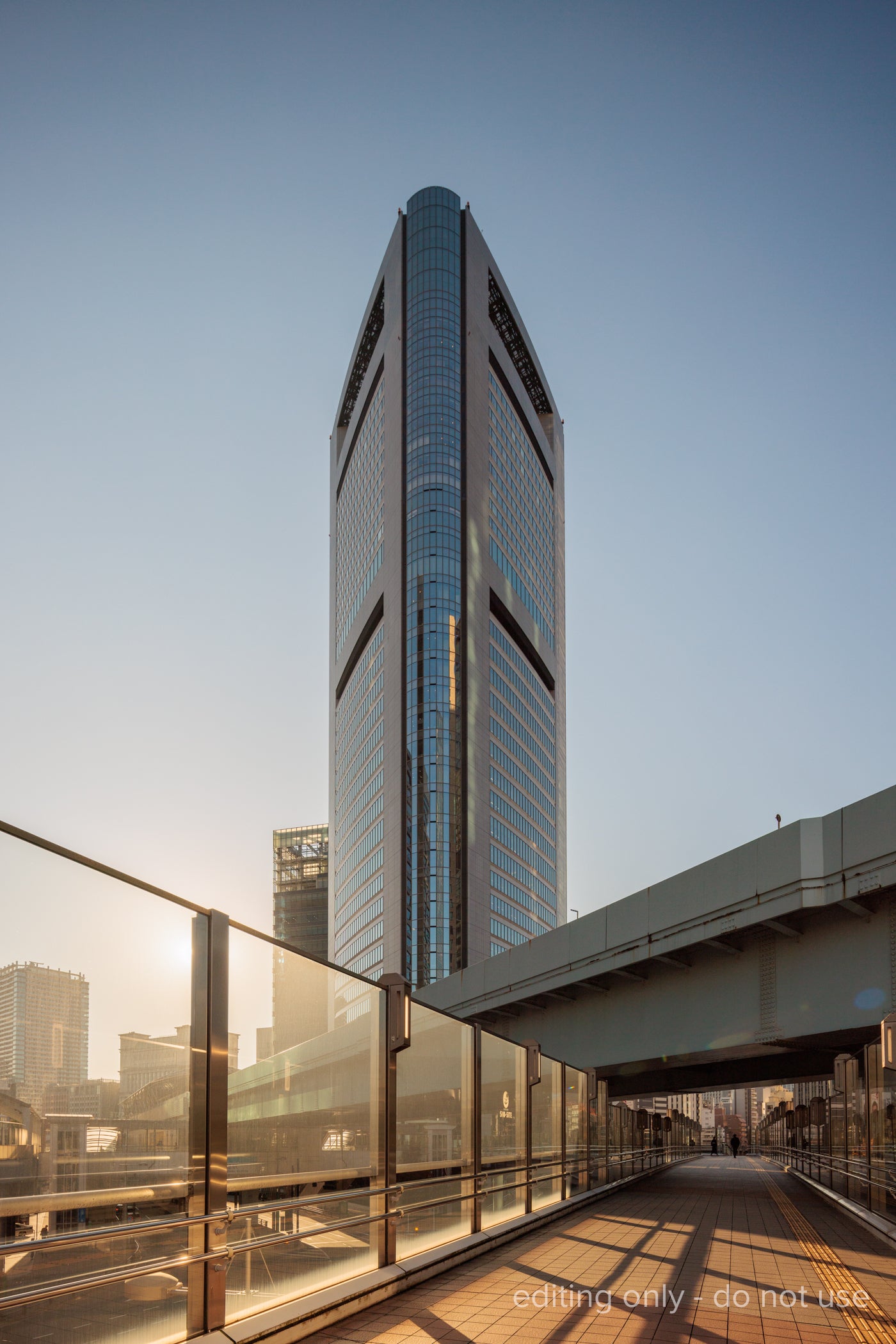
Park Hotel Tokyo is a sister hotel of Shiba Park Hotel, founded in 1948. Located on floors 25–34 of Shiodome
Media Tower, it offers panoramic views of Tokyo Tower
and Mt. Fuji. The hotel has 268 guestrooms, including 51 Artist Rooms where artists paint directly on the walls.
These Artist Rooms, designed as spaces to experience
Japanese aesthetics, have received the Excellence Award in the Japan Tourism Awards.
https://parkhoteltokyo.com
行動者ストーリー詳細へPR TIMES STORYトップへ